
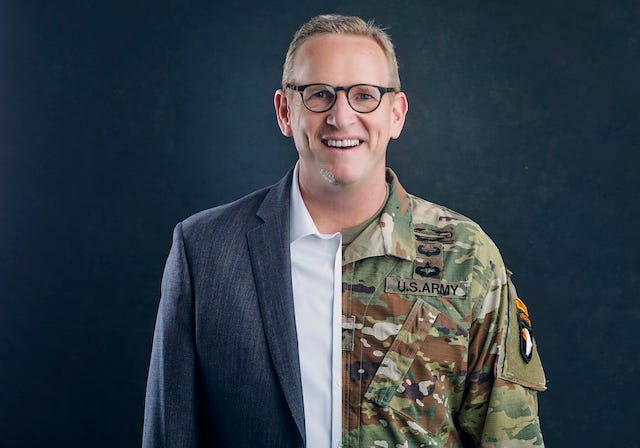
“Lives or livelihoods, the battlefield has much to teach us about leadership.” Colonel Rob Campbell
There are indeed dangerous professions outside the military. First responders come to mind. Some in the trade space working at high elevations or dangerous environments relate as well. However, most businesses operate in relative safety far from harm. My blinds business will never assault a beachhead or seize an enemy combatant on a midnight raid. How then, do battlefield leadership lessons translate? There are differences indeed, but the similarities are striking and relevant.
The pressure is high in the military. Lives are at stake. This causes leaders to step up and be ‘on their game.’ While military failures, injury, and death to service members can be a result of bad luck operating in harm’s way, poor leadership can play a role. Failure in a business, I have found in my leadership practice, is often the result of poor leadership. Employee turnover is a leadership problem for example. What are the lessons?
Leadership in the military is an incredibly human endeavor. Leaders in the U.S. Army often talk about our core strength being our people not our equipment. Leaders are trained and evaluated on how well they influence their people to learn and grow and to make the organization better. The are charged with the wellbeing of their people. Responsibility and authority are pushed downward to the lowest soldier who has stake in the overall success of the mission and who may have to step into a leadership role and accomplish the intent of the commander. Teamwork is predominant. Communication is everything. Communicate poorly, fail to invest in your people, sew discontent, fail to form and foster a healthy and winning culture, and failure – death may be imminent.
The battlefield leader is a person of character complete with a set of personal core values and morality. The battlefield leader has great presence. He or she looks and acts the part – speaking clearly and carrying themselves confidently. The battlefield leader is vulnerable and humble. He or she keeps their ego in check. They seek the input of others. They admit when they don’t have all the answers. They take charge indeed, but they invite mature and beneficial debate. The battlefield leader is courageous. This doesn’t mean they are not frightened. They ‘saddle up,’ amidst this fear and do their leader job – coaching, teaching, directing, and caring. The battlefield leader honors the position they hold. They do not micro mange doing the jobs of their subordinates. The see the bigger picture and look across and influence the greater team steering them toward a shared vision and mission guided by values and culture.
In most businesses, lives are not at stake, but livelihoods are. In a world of disengaged employees (Gallup), I believe the battlefield has much to teach us. I use its lessons daily in my small private business with great success. I don’t have to bark orders or wave my people forward as we assault a hill. Instead, I give orders with calm, caring, clarity backed by our vision, values, and culture only after I’ve developed healthy relationships built on trust. I love my people as I loved my soldiers. I am still afraid of hard conversations and of controversy. I’m not embarrassed to admit that. I know I must be a coach teaching my people to solve problems, take initiative, and to espouse our values.
I believe it is the intensity of the battlefield which has taught me to lead effectively. I’m not perfect. I still pick up a mirror and question my leadership. I make mistakes. I let my emotions get the best of me and even my ego pays a visit now and then. The livelihoods of my people and their wellbeing is at stake each day and I take that very seriously. Therefore, I follow the lessons of the battlefield. All leaders should do that. Lives or livelihoods, the battlefield has much to teach us about leadership.
I’m ready to speak, teach, and coach the lessons of the battlefield to you and your team today. Let’s talk before you head into battle!
Make it Personal!
