
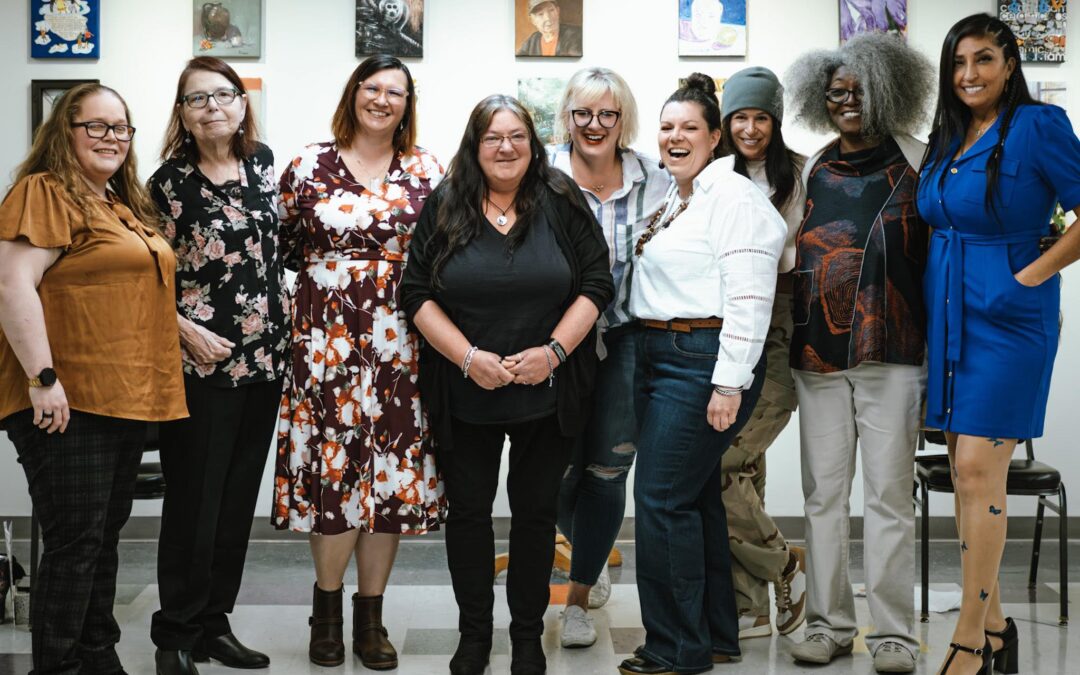
In a world where veterans often find themselves battling challenges such as addiction, homelessness, and isolation, Jenny Pacanowski, the founder and director of Women Veterans Empowered & Thriving (WVET), stands as a beacon of hope.
Pacanowski, a woman veteran herself, understands the unique struggles faced by her fellow servicemen and women, especially those who go unrecognized and unsupported.
WVET originally focused on women veterans, who are often overlooked in their specific needs. Pacanowski’s personal experiences fueled her desire to create a program that not only values their time but also equips them with practical skills for daily life.
The essence of WVET’s empowerment model lies in encouraging internal self-validation, rather than seeking external approval. This model proved so successful that WVET expanded its reach to include all veterans and even civilian support members.
Pacanowski’s motivation to start WVET stemmed from a deep-seated desire to prevent her peers from suffering in silence. By providing them with tools, practices, and a platform to voice their stories, she aims to facilitate a comprehensive homecoming for the mind, body, and soul.
WVET’s mission statement beautifully encapsulates this ethos: “a reintegration program for veterans that utilizes writing and performance to empower them to thrive in their daily life. We guide Veterans to reconnect with their mind, body, soul, and passion for life. Through creativity, compassion, and camaraderie in a nonjudgmental space, we empower each other to ascend to the best version of ourselves.”
Looking ahead to 2024, Pacanowski hopes to collaborate with the Department of Defense (DOD) and the Veterans Administration (VA) to introduce WVET’s empowerment model and ritual storytelling to all military members transitioning back to civilian life. The goal is to extend these services to the National Guard and reserves as well.
WVET, run by disabled veterans and their family members, noticed a gap in reintegration services and sought to fill it with its unique approach. Their calendar for 2024 is packed with seven monthly empowerment workshops, continued programs at Muncy Prison for incarcerated women veterans, panel discussions, public speaking events, and ritual storytelling sessions. These activities are designed not just for healing but for advocacy, allowing veterans to share their experiences through the powerful medium of spoken word. In a departure from traditional peer support groups or writing workshops, WVET’s model focuses on retraining the brain, shifting from a military mindset to one of thriving as a veteran. It’s an environment where skills and free writing combine to foster a community of authentic support.
As Zina Bethea Dawson’s quote, shared by Pacanowski, says, “You cannot feel what you don’t reveal.” WVET embodies this philosophy, creating a space where veterans can unveil their experiences and emotions, paving the way for healing and empowerment. This is the essence of WVET, a place where veterans are not just surviving but thriving.
