

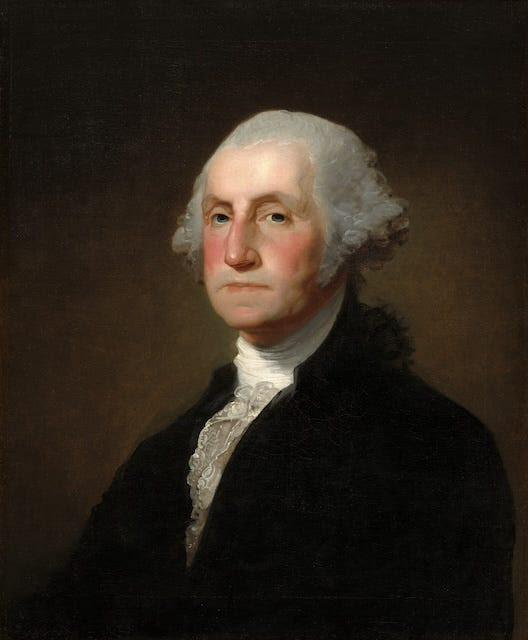
“I hope I shall possess firmness and virtue enough to maintain what I consider the most enviable of all titles, the character of an honest man.” George Washington
Presence is a fundamentally important leadership characteristic rarely considered, formally anyway, when we measure leaders and leadership. For some reason it remains in our subconscious as we analyze and follow (or not) leaders. It’s because it is harder to define. While serving as an Army commander, when evaluating a leader, if they lacked presence, I would tell them then coach them on how to develop it. To do this I would recall leaders we admire and examine why. Leaders such as Nelson Mandela, George C. Marshall, and Winston Churchill, served as superb examples for this tutelage. The father of our country, George Washington ranks among the very best in leadership presence in my assessment. He was always my default example.
It’s 2026, a year to celebrate our nation’s 250th Birthday – the Semiquincentennial in grand fashion. I’ll celebrate and honor our nation’s founding the best way I know how – writing about leadership. Along with my weekly blogs, each month throughout 2026, I’ll bring you leadership lessons leveraging our nation’s founding. I hope you’ll join me and share these with fellow workers, friends, family, and leaders. We are all the beneficiaries of the vision, courage, unwavering commitment, wisdom, and steadfast leadership of our Founding Fathers. If you missed the January Edition, here it is. Back to leadership presence.
George Washington’s fame did not come from his prowess as a military tactician. He is not remembered as is General George S. Patton for his battlefield accomplishments. Some historians describe Washington as a poor battlefield leader. His success is defined instead by his presence. By almost every account, Washington is remembered for his selflessness, integrity, humility, and vision and foresight. He was tall, standing 6 feet, 2 inches which, while not a presence prerequisite, helped. His demeanor was always one of calm confidence. I have struggled to find any depiction of him as a hot-headed, erratic leader. Most define him simply as a leader. It was his presence which earned him that.
From his early involvement in the nation’s founding as Colonel George Washington, he is remembered and distinguished by this calm, confidence. He looked the part. In every painting he was dressed professionally – as an officer leading men wearing rags. Indeed, contemporary leadership demands we better supply our people. The leader strutting around well-groomed and outfitted leading ill-equipped people lacks presence. The point here is a leader must look the part. I spent time in the field with my men and women, and I got as dirty as they did but I always made a point to ensure my uniform and equipment was serviceable and worn properly, that my rank was represented. Today in my small business many of my people wear t-shirts and comfortable work clothes. While I want to be comfortable, I feel the need to look the part with a collar shirt and clean presentable clothes – Washington’s legacy…
While not particularly known as a great orator, George Washington left behind some of our nation’s finest words, captured in his writings and speeches. His prose was every bit of his presence and leaders must strive to emulate it. As a leader, I struggled to craft the words and sentences the moments often demanded yet I knew I needed to invest in writing and communicating to be a presence leader. I had to work harder at it than my subordinates did. I knew my words would stick and I knew they would define my presence.
Reviewing poor examples is also helpful when evaluating and teaching leadership presence. Given these blogs focus on our nation’s founding, our second U.S. President John Adams is a good example. John Adams is indeed an indispensable man maybe the indispensable man when it comes to the founding of our country. I and many others hold him in the highest regard. However, he lacked leadership presence. He was a short, portly man who, while remarkably intelligent and well-spoken, was blunt, and somewhat rude. His presence is best illustrated by David McCullough’s 2001 book, “John Adams,” describing him as “tactless, quick tempered, and abrasive,” among other imperfections. It is this presence or lack thereof among all his noteworthy accomplishments I believe, which caused him to be the Founding Father less remembered and celebrated than men like Washington, Jefferson, and Franklin.
Presence matters. It mattered in 1776, and it matters today. I’m grateful for the example of George Washington. His embodiment of presence – words and deeds, helped me counsel and coach many leaders. He was my north star of presence to emulate in my own leadership.
Happy President’s Day and happy 250th America! More Semiquincentennial leadership lessons in March!
Make it Personal!
– Rob
Read more from Rob here.
